
In today’s society, AI is becoming a frequent tool in so many ways. This is an
example of how AI can be used to assist in the digital marketing process. I used
ChatGPT to identify a customer persona, search engine optimization (SEO),
content creation, and image creation for Wholestone Prestage. We’ll workt hrough each of these sections more in detail.
Customer Persona
Information Needed
First, to create a customer persona for any business, you need specific
information for what a typical customer would look like. I started off by asking
ChatGPT what information I needed to make a customer persona by entering in this prompt:
I want to create a customer persona. What information do you
need to create it?
ChatGPT returned the following response:
To create a customer persona, I need information about the company, its target customers, and their purchasing behaviors. A customer persona is a fictional profile representing an ideal customer, based on available data and research.
Here is the information I would need:
1. Company Information
- Company name and industry
- Products or services offered
- Company mission, values, and unique selling points
- Geographic markets served
2. Target Audience Demographics
- Age range and gender, if relevant
- Geographic location
- Income level or budget
- Education level
- Occupation or job title
3. Customer Goals and Motivations
- What customers want to accomplish
- Their needs and priorities
- What influences their purchasing decisions
- What problems they want to solve
4. Challenges and Pain Points
- Problems customers experience
- Barriers that prevent them from purchasing
- Concerns about price, quality, reliability, or convenience
- Challenges with current products or suppliers
5. Buying Behavior
- How customers research products or services
- Where and how they make purchasing decisions
- How frequently they purchase
- What factors influence their choice between competitors
6. Interests and Lifestyle
- Hobbies and interests
- Personal or professional values
- Lifestyle preferences
- Activities or communities they participate in
7. Online Behavior and Media Preferences
- Social media platforms they use
- Websites and online resources they visit
- How they search for information
- Types of content they prefer, such as videos, blogs, reviews, or articles
8. Brand Preferences and Expectations
- Brands they currently use or trust
- What they expect from a company
- Preferred communication methods
- What would encourage them to remain a loyal customer
9. Customer Research and Data
- Customer surveys or interviews
- Website analytics and search data
- Social media insights
- Sales data and customer feedback
- Industry research and competitor information
The more reliable information available, the more accurate and useful the customer persona will be. If certain details are unavailable, I can make reasonable estimates based on general industry knowledge, clearly identifying them as assumptions rather than verified facts.
To help ChatGPT try to form a proper customer persona, I attached a file with all the customer persona information I previously collected. This is the same information that can be found in my customer persona blog post. After I attached the file, I entered this prompt:
OK, I’m uploading a file about the typical Wholestone Prestage Customer. Based on the file, try to infer all the information you need to create a customer persona (i.e., a promising new customer persona). Then, also list the information you think is still needed.
ChatGPT gave me this response.
Based on the information provided, I can infer most of the information needed to create a customer persona for Wholestone Prestage. The target customer is a retail meat buyer for a grocery chain, such as Cub Foods, who purchases pork products for grocery meat departments.
1. Inferred customer information
| Information category | Inferred information |
| Demographics | Likely 30–55 years old, any gender, based in Minnesota or another Midwestern market. |
| Education and occupation | May have a degree in business, marketing, merchandising, agriculture, or a related field. Works as a Retail Meat Buyer or Meat Category Manager. |
| Values and beliefs | Values product quality, competitive pricing, reliable supply, profitability, and strong supplier relationships. |
| Personality traits | Likely analytical, organized, strategic, and an effective communicator. |
| Motivations | Wants to increase meat department sales and profitability while meeting customer demand. |
| Challenges and pain points | Must manage product costs, inventory, changing consumer preferences, product quality, and profit margins. |
| Buying behavior | Makes business purchasing decisions based on quality, price, demand, profitability, and supplier reliability. |
| Product usage | Purchases fresh pork and marinated pork products for grocery meat departments. |
| Online behavior | May use supplier websites, email, LinkedIn, industry publications, market research, and sales data. |
| Goals and objectives | Maintain a profitable meat department, offer products customers want, and ensure dependable product availability. |
| Potential barriers | Price, product availability, quality concerns, transportation, consumer demand, and existing supplier relationships. |
| Common questions | Asks about pricing, product selection, specifications, delivery, supply, product origin, and competitive advantages. |
2. Information that is still needed
Although the information provided is enough to develop a useful persona, some details are still missing or cannot be confirmed without additional research.
- Specific purchasing authority: Whether the buyer makes final supplier decisions or requires approval from other managers.
- Purchasing volume and frequency: How much pork the buyer purchases and how often orders are placed.
- Budget and pricing requirements: Specific cost targets, margins, and purchasing budgets.
- Preferred supplier criteria: The exact standards used to evaluate and compare pork suppliers.
- Detailed online behavior: Which platforms the buyer uses most often and what types of content influence purchasing decisions.
- Verified customer insights: Actual interviews, surveys, sales records, or website analytics that confirm these characteristics.
- Personal interests and family background: These details are unknown and are not essential to understanding the buyer’s professional purchasing decisions.
These missing details could be investigated through customer interviews, company sales data, industry research, and website or social media analytics. Any estimates should be treated as assumptions until verified.
3. Summary
The information provided is sufficient to create a preliminary customer persona for Wholestone Prestage. The strongest available insights concern the buyer’s professional responsibilities, purchasing priorities, challenges, and supplier expectations. More specific information about purchasing authority, order volume, and actual buyer behavior would help make the persona more accurate.
Some information about a retail meat buyer is not available from the initial file. In this step, I will ask ChatGPT to estimate the missing information using general knowledge about grocery retail purchasing and business-to-business supplier relationships. This will help create a more complete customer persona for Wholestone Prestage.
Non-providable information
I entered the following prompt.
“Based on the customer profile and information provided earlier, use general industry knowledge to make reasonable estimates about the following missing information for a retail meat buyer at a grocery chain like Cub Foods:
- Specific purchasing authority: Does the buyer make final supplier decisions, or do other managers need to approve them?
- Purchasing volume and frequency: How much pork might the buyer purchase, and how frequently might orders be placed?
- Budget and pricing requirements: What cost targets, profit margins, and budget considerations might influence purchasing decisions?
- Preferred supplier criteria: What standards would the buyer use to evaluate and compare pork suppliers?
- Detailed online behavior: Which online platforms and content types might the buyer use when researching suppliers and purchasing options?
- Verified customer insights: What types of interviews, surveys, sales records, or website analytics would help confirm the buyer’s characteristics and behavior?
- Personal interests and family background: What interests or personal responsibilities might be relevant to understanding this buyer?
Clearly distinguish reasonable estimates from verified facts. Do not invent specific company data or claim that assumptions are confirmed.”
Based on general knowledge of grocery retail purchasing, ChatGPT provided the following estimates:
- Specific purchasing authority: A retail meat buyer may recommend or select suppliers within established guidelines. Major supplier agreements, pricing commitments, or contract changes may require approval from senior management or a procurement team.
- Purchasing volume and frequency: The buyer may coordinate recurring orders based on store demand, inventory levels, sales forecasts, and supplier delivery schedules. Purchasing volume and order frequency would vary depending on the grocery chain, number of stores, and product demand.
- Budget and pricing requirements: The buyer likely works within purchasing budgets and evaluates product costs, expected sales, gross margins, promotions, and overall profitability. Specific budget amounts and margin targets are unknown.
- Preferred supplier criteria: The buyer may evaluate suppliers based on product quality, pricing, product availability, delivery reliability, food safety requirements, product specifications, communication, and the ability to meet purchasing needs.
- Detailed online behavior: The buyer may use email, LinkedIn, supplier websites, industry publications, and online market reports to research suppliers and industry trends. Product specifications, pricing information, and professional recommendations may influence purchasing decisions.
- Verified customer insights: Interviews with retail meat buyers, customer surveys, purchasing records, sales data, website analytics, and supplier feedback could help verify the persona’s characteristics and buying behavior. These sources would need to be collected and analyzed; they are not currently available in the information provided.
- Personal interests and family background: The buyer may enjoy cooking, grilling, or outdoor activities, but these are only possibilities. Family responsibilities may affect work-life priorities, although specific personal details are unknown and are not necessary for understanding the buyer’s professional role.
These estimates help identify possible purchasing behaviors and information that would be valuable to investigate further. Actual purchasing authority, order volumes, budgets, and individual preferences should be confirmed through research rather than treated as established facts.
Generating Customer Persona
Prompt: Now, you seem to have all the information to create a customer persona. Using the information in our conversation, create a customer persona.
Customer Persona
Name: Matt Johnson
Age: 42
Location: Minnesota
Occupation: Meat Category Manager at a regional grocery retailer
Industry: Grocery retail and fresh food merchandising
Background:
Matt is responsible for selecting pork products and working with suppliers to meet the needs of grocery meat departments. He evaluates product quality, pricing, availability, and sales performance to make purchasing decisions that support his stores and customers.
Goals and Motivations:
- Provide high-quality pork products that customers want to purchase.
- Maintain competitive prices and healthy profit margins.
- Ensure a consistent supply of products for grocery stores.
- Build dependable, long-term supplier relationships.
- Identify fresh and value-added pork products that meet changing consumer preferences.
Challenges and Pain Points:
- Managing fluctuating product costs and protecting profitability.
- Balancing inventory with changing customer demand.
- Maintaining consistent product quality and availability.
- Coordinating orders and deliveries across grocery locations.
- Evaluating suppliers while maintaining existing business relationships.
Buying Behavior:
Matt makes purchasing decisions based on product quality, competitive pricing, reliability, product specifications, and expected customer demand. He may recommend suppliers or select them within company guidelines, while larger agreements may require management approval.
Information and Communication Preferences:
- Email: Supplier communication, pricing, product details, and order coordination.
- LinkedIn: Professional networking and business updates.
- Supplier websites: Product information and company background.
- Industry publications and market reports: Grocery trends and purchasing insights.
Objections and Concerns:
Matt may hesitate to change suppliers if a new supplier cannot demonstrate competitive value, dependable deliveries, consistent quality, and the ability to meet his stores’ needs. He may also consider transportation costs, product availability, and existing supplier agreements.
How Wholestone Prestage Could Appeal to Matt:
Wholestone Prestage could appeal to Matt by emphasizing its pork product offerings, quality standards, supply capabilities, competitive value, and relationships with Midwest pork producers. Clear product information and dependable communication could help build confidence in the company as a potential supplier.
Customer Quote:
“I need a pork supplier that delivers consistent quality, competitive value, and dependable service so I can keep my meat department stocked and meet my customers’ needs.”
Summary:
Matt Johnson represents a potential business-to-business customer for Wholestone Prestage. His priorities center on product quality, profitability, reliable supply, and supplier relationships. This persona can help guide marketing content toward the information grocery retail buyers need when evaluating pork suppliers.
Note: Matt is a fictional customer persona. His age and location come from the supplied customer profile. Other characteristics are based on the provided information and reasonable assumptions, not verified details about an actual buyer.
Search engine optimization
Keyword Research
It is very easy to determine keywords using AI. I entered this prompt to
determine 5 keywords for Wholestone Prestage.
Prompt: Make a list of the top 5 keywords people use to find information about Wholestone Prestage on Google. Separated by comma
ChatGPT gave me this response.
The top five keywords people might use to find information about Wholestone Prestage on Google are:
Wholestone Prestage, wholesale pork supplier, fresh pork products, pork processing company, value-added pork products
These are suggested keywords based on the company’s industry and products. Actual Google search volume and rankings would need to be verified using an SEO research tool.
Content Creation
Blog Post Idea
To create a blog post, you need some ideas. I asked ChatGPT to provide some ideas for possible blog posts.
Prompt: Write 10 blog post ideas about Wholestone Prestage that the customer persona created earlier is searching for.
Here are 10 blog post ideas that align with Matt Johnson, a grocery retail meat buyer who prioritizes product quality, competitive pricing, reliable supply, and profitability.
- How to Choose the Right Pork Supplier for Your Grocery Store
Explain the key factors grocery retailers should consider when evaluating pork suppliers, including product quality, pricing, and reliability. - Fresh Pork Products: What Grocery Retail Buyers Should Look For
Discuss product quality, product specifications, consistency, and availability when selecting fresh pork products. - How Value-Added Pork Products Can Expand Your Meat Department Selection
Explore how marinated and other value-added pork products can offer more options for grocery shoppers. - Why Reliable Pork Suppliers Matter for Grocery Retailers
Explain how dependable supply and clear communication can help retailers manage inventory and maintain product availability. - Balancing Pork Product Costs and Profit Margins in Grocery Retail
Discuss how buyers can evaluate product costs, pricing, and overall value when making purchasing decisions. - What Grocery Retail Buyers Should Know About Pork Product Sourcing
Explore the importance of understanding where pork comes from and how product sourcing information can support purchasing decisions. - How to Meet Changing Consumer Preferences in the Meat Department
Discuss how grocery retailers can evaluate their pork selection to better meet shoppers’ needs and preferences. - Building Strong Supplier Relationships in the Pork Industry
Explain how communication, consistency, and trust can support long-term relationships between pork suppliers and grocery retailers. - Questions to Ask Before Choosing a Wholesale Pork Supplier
Provide a practical checklist of questions about pricing, product specifications, availability, delivery, and quality standards. - From Midwest Farmers to Grocery Stores: Understanding the Pork Supply Chain
Explore how pork moves through the supply chain and why transparency, coordination, and reliable partnerships matter to grocery retailers.
These blog post ideas focus on the professional needs of grocery retail meat buyers. They provide opportunities for Wholestone Prestage to share useful information, demonstrate its industry knowledge, and build relationships with potential business customers.
Writing a Blog Post
Prompt: I want you to act as a blogger with expertise in the pork processing and grocery retail industries. You are writing a blog post for “How to Choose the Right Pork Supplier for Your Grocery Store.” This post should be helpful for grocery retail meat buyers and category managers who are learning about pork suppliers such as Wholestone Prestage.
There should be a call to action at the end of each section. The length of the blog post will be approximately 500 words. The tone will be informal.
You should write as an individual blogger with a personal approach, so do not use plural first-person to refer to yourself. For example, do not use “our” or “we.” Only use singular first-person when referring to yourself. Do not use passive voice.
This is the response ChatGPT gave me.
How to Choose the Right Pork Supplier for Your Grocery Store
Choosing the right pork supplier is an important decision for any grocery store. Meat buyers need to balance product quality, pricing, availability, and customer demand while maintaining healthy profit margins. With several suppliers to consider, knowing what to look for can make the purchasing process easier.
1. Prioritize Consistent Product Quality
Quality is one of the most important factors when choosing a wholesale pork supplier. Grocery shoppers expect fresh, appealing products that meet their expectations every time they visit the meat department. Inconsistent quality can affect customer satisfaction and make it harder to build repeat business.
When evaluating suppliers, ask about their quality standards, product specifications, and processes for maintaining consistency. These details can help you determine whether a supplier fits your store’s needs.
Call to action: Review your current product standards and identify the quality requirements a potential pork supplier must meet.
2. Compare Pricing and Profitability
Competitive pricing matters, but the lowest price is not always the best choice. Meat buyers must consider how product costs affect retail pricing, promotions, and overall profitability. A supplier that offers dependable quality and service may provide value beyond the initial purchase price.
Compare supplier quotes and consider how each option fits your pricing strategy. It is also helpful to discuss available products and purchasing options that could support your meat department’s goals.
Call to action: Compare pricing from potential suppliers and evaluate how each option could affect your department’s profit margins.
3. Look for Reliable Supply and Delivery
Empty shelves can mean missed sales and disappointed customers. A reliable pork supplier should be able to communicate clearly about product availability, ordering requirements, and delivery expectations.
Before committing to a supplier, ask how orders are handled and how potential supply disruptions are communicated. Understanding these details can help you plan inventory and avoid unnecessary surprises.
Call to action: Ask potential suppliers about their ordering process, product availability, and delivery expectations before making a decision.
4. Understand Where Your Pork Comes From
Today’s grocery retailers need to understand their products and be prepared to answer questions about sourcing. Working with a supplier that can provide clear information about product origin can help buyers communicate with their teams and support transparency for consumers.
For example, Wholestone Prestage connects with Midwest pork producers through its farmer-owned business background. Retail buyers evaluating the company can ask about its products, sourcing information, and how its offerings align with their stores’ needs.
Call to action: Make product origin and sourcing transparency part of your supplier evaluation checklist.
5. Build a Strong Supplier Relationship
A good supplier relationship involves more than placing orders. Clear communication, responsive service, and an understanding of your business can make the purchasing process smoother over time.
Look for suppliers that answer questions, provide accurate product information, and understand the priorities of grocery retail buyers. Building a dependable relationship can help you manage changing demand and plan for future opportunities.
Call to action: Schedule a conversation with a potential supplier to discuss your product needs, expectations, and long-term goals.
Final Thoughts
Choosing the right pork supplier requires looking beyond price alone. Quality, profitability, reliable supply, sourcing transparency, and communication all play a role in finding the right fit for your grocery store.
Taking time to evaluate these factors can help meat buyers make informed purchasing decisions and keep their departments prepared to meet customer demand.
Call to action: Use these five factors to evaluate your current pork suppliers and identify opportunities to strengthen your grocery store’s meat department.
Social Media Post
Now that we have a blog post written by AI, we’ll ask ChatGPT to create a
LinkedIn post based on the blog post idea above as well.
Prompt: Create a LinkedIn post about “How to Choose the Right Pork Supplier for Your Grocery Store” for the customer persona, Matt Johnson. Focus on quality, pricing, reliable supply, and sourcing transparency. Use a professional, conversational tone, include hashtags, and add a link to the full blog post.
How to Choose the Right Pork Supplier for Your Grocery Store
Choosing a pork supplier involves more than finding the lowest price. Grocery retail meat buyers must balance product quality, profitability, reliable supply, and customer demand to keep their meat departments successful.
Here are five factors to consider when evaluating a wholesale pork supplier:
🥩 Product Quality: Look for consistent quality that meets your store’s standards.
📊 Competitive Pricing: Compare costs while considering profit margins and overall value.
🚚 Reliable Supply: Choose a supplier that communicates clearly about product availability and delivery expectations.
🌾 Sourcing Transparency: Understand where your pork comes from and what information your supplier can provide.
🤝 Strong Relationships: Build partnerships with suppliers who understand your needs and communicate effectively.
For grocery retailers, finding the right supplier can help support customer satisfaction and long-term business goals.
Want to learn more? Read my full blog post on choosing the right pork supplier for your grocery store:
[Insert your published blog post URL here]
#WholestonePrestage #PorkIndustry #GroceryRetail #MeatBuyers #FoodSupplyChain
Image Creation
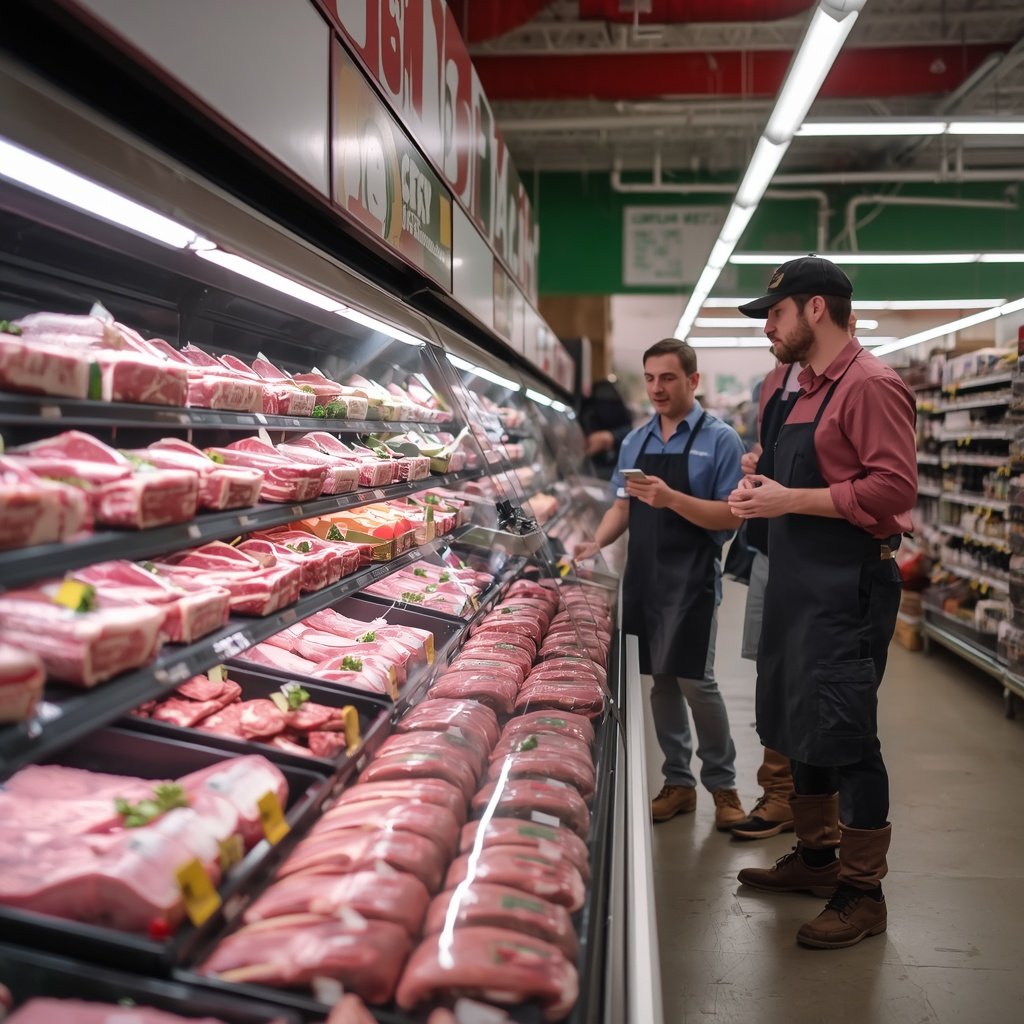
Prompt (ChatGPT): I am going to create an image using an AI image generator to illustrate my blog post, “How to Choose the Right Pork Supplier for Your Grocery Store.” Write a detailed prompt for an image generator to create a relevant image for grocery retail meat buyers.
Prompt made by ChatGPT for Leonardo.AI: Create a professional, realistic image of a grocery store meat department featuring fresh pork products neatly displayed in a clean refrigerated case. Include a grocery meat buyer reviewing the products and discussing quality with a supplier. Show an appealing, well-organized retail environment with natural lighting and subtle red, white, and green accents. The image should communicate product quality, reliable supply, and strong supplier relationships. Use a polished commercial photography style suitable for a professional pork industry blog post. Avoid text and logos.
Last Remarks
This process allows us to be able to see how useful AI can be when it comes to
content creation in digital marketing. We have determined a customer persona, keywords, written a blog, created a LinkedIn post, and created an AI-generated image for Wholestone Prestage. ChatGPT is a simple tool to use and can be very useful.